
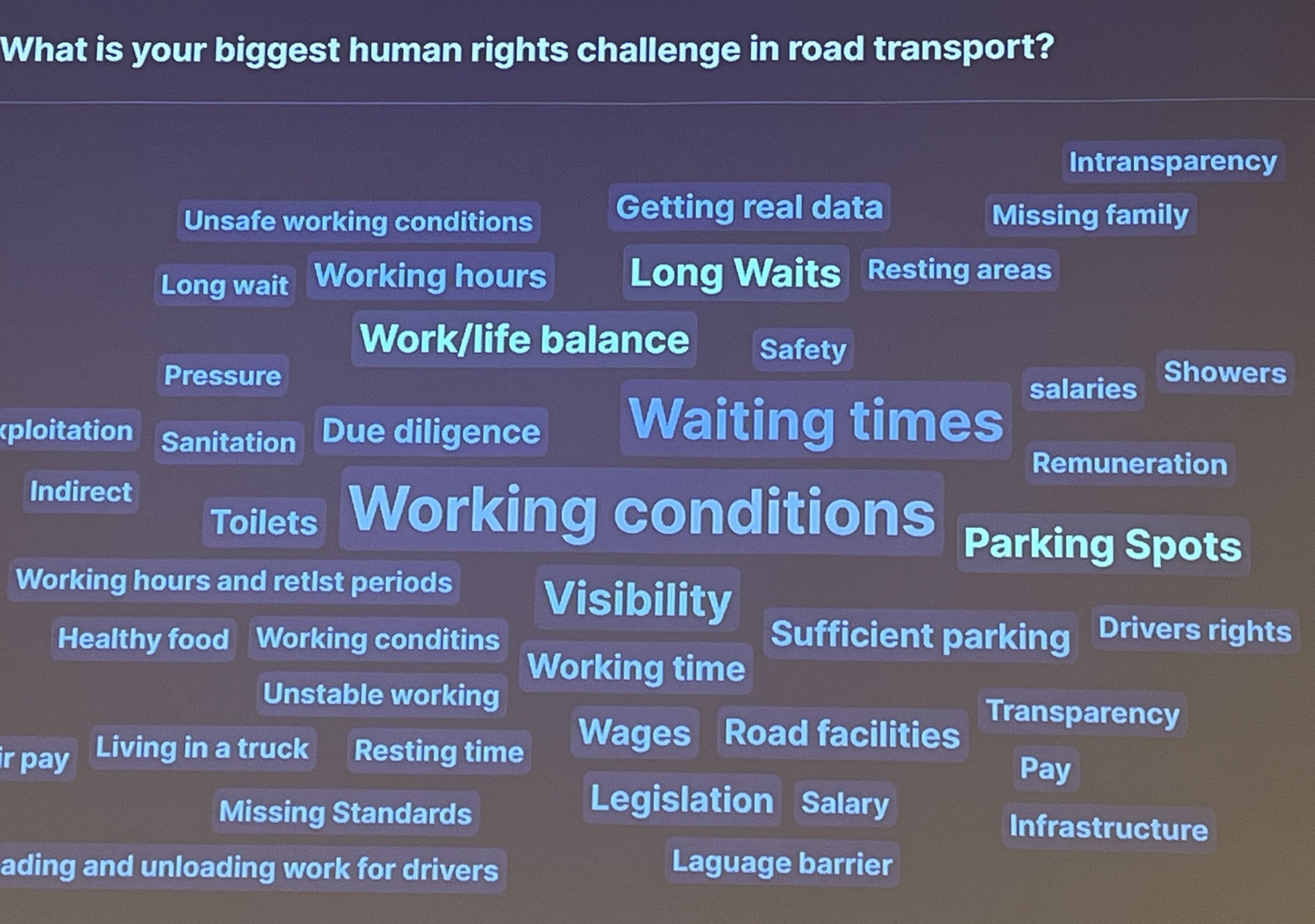
European Shippers’ Council attended the AIM-Progress “Human Rights in Road Transport” event in Brussels on 24 September. The event brought together shippers, carriers, and other stakeholders to discuss human rights due diligence and working conditions in road transport.
With contributions from Danone and Nestlé, the discussion covered the challenges faced by drivers, the evolving EU regulatory framework, and how companies can put due diligence requirements into practice. The discussion also drew on the work of the Road Transport Due Diligence (RTDD) Foundation, which focuses on human rights and working conditions in the European road transport sector. Edwin Atema from the RTDD Foundation presented examples of risks affecting drivers, including recruitment fees, pay, accommodation, and access to grievance mechanisms.
One of the main points raised was the difficulty of identifying risks through traditional audits alone. Complex transport supply chains can involve several layers of subcontracting, making it difficult for companies to have a clear picture of working conditions further down the chain.
Participants also discussed the EU Mobility Package and EU human rights due diligence legislation, as well as the importance of effective implementation and enforcement.
For shippers, this underlines the need to work closely with transport providers and improve visibility beyond the immediate contractual relationship. Supplier guidance, appropriate assurance tools, and direct engagement can all support this process.
The event also highlighted the importance of cooperation between shippers and carriers in identifying and addressing human rights risks in road transport.
For European Shippers’ Council, the event provided a useful opportunity to exchange with stakeholders on practical approaches to human rights due diligence and working conditions in the road transport sector.